.svg)

eMarketer recently shared an interesting statistic that likely didn’t shock many of us: marketers are twice as likely to focus on brand awareness and other top-of-funnel goals for YouTube campaigns compared to bottom-funnel objectives like driving conversions. This isn’t surprising. YouTube dominates the top-of-funnel space, relying heavily on impressions to maintain its business model—a model that hasn’t evolved much since it began monetizing in 2007.
What is surprising, however, is that many marketers still see video as solely an awareness tool. In an age where technology allows for interactive and shoppable video experiences, why are advertisers still limiting video’s potential, confining it to the awareness bucket and prioritizing reach over engagement? In today’s world, where data reigns supreme, the idea of completion rates as the only metric for video campaigns seems ludicrous.
Why are we still thinking this way?
The challenge with traditional video
The classic advertising dilemma—“I know half my advertising works; I just don’t know which half”—has haunted marketers for over a century. Video is no exception. Historically, video has been measured primarily by completion rates, ie the percentage of viewers who watch a video to the end. Advertisers even opt to buy “non-skippable” ads to boost this metric. But completion rates are a flawed measurement of success. Without technological advancements or a shift in mindset, completion rates became a proxy for ROI.
As a result, video was pigeonholed as a brand awareness tool, with success measured by how many people watched a video from start to finish, rather than a direct response channel designed to engage and convert consumers into customers.
Challenging the status quo
Enter shoppable video—a game-changing format that offers direct engagement and measurable ROI. Thanks to advances in streaming technology, AI-powered object detection, and enhanced data collection, shoppable video is disrupting traditional thinking. It’s empowering marketers to view video as more than just a brand-building tool—it’s a potential goldmine for lower-funnel activities.
At its core, shoppable video allows consumers to engage directly with content, whether by exploring products or learning more about something else while the video plays. Over the past few years, various forms of shoppable video have emerged, but not all are created equal. From QR codes to clunky banner ads overlaying videos, many of these early solutions failed to deliver a seamless experience. Thankfully, more sophisticated options are now available.
One such example is Clicktivated, which leverages AI to provide an intuitive and consumer-friendly viewing experience. This technology enables content creators across industries to “activate” individual products within a video, allowing viewers to learn more or make a purchase directly from the video itself. This innovation marks the end of completion rates as the primary KPI. The future of video lies in driving real monetization and ROI.
The next frontier and how to get started
Shoppable video opens new possibilities for content creators across industries—from tourism to retail. By embedding clickable links directly into the video, creators gain access to granular analytics, tracking audience engagement at the product level. Further, these metrics can go beyond engagement to track conversions and even revenue generated from video interactions.
Does it get any better for generating and measuring lower-funnel activity? We don’t think so. Goodbye, video awareness bucket. To learn more and get started with shoppable video, reach out to us at hello@Clicktivated.com.
More Posts

Clicktivated Interactive Edge: What’s Changing in Winter Travel
We work in an industry fueled by passion, creativity, and the belief that travel changes people. We’re grateful every day for the destinations, brands, and teams who trust us with their stories.Even though Clicktivated is built on powerful technology, our focus has always been helping our partners succeed. Supporting an industry we genuinely love is a privilege, and one we don’t take lightly.

The Traditional Marketing Funnel Didn’t Just Evolve, It Shattered
For more than a century, the marketing funnel offered marketers a sense of order, guiding people from awareness to conversion through a predictable path. But over time it shifted from understanding behavior to automating it, leaving behind the complexity of how people actually make decisions.
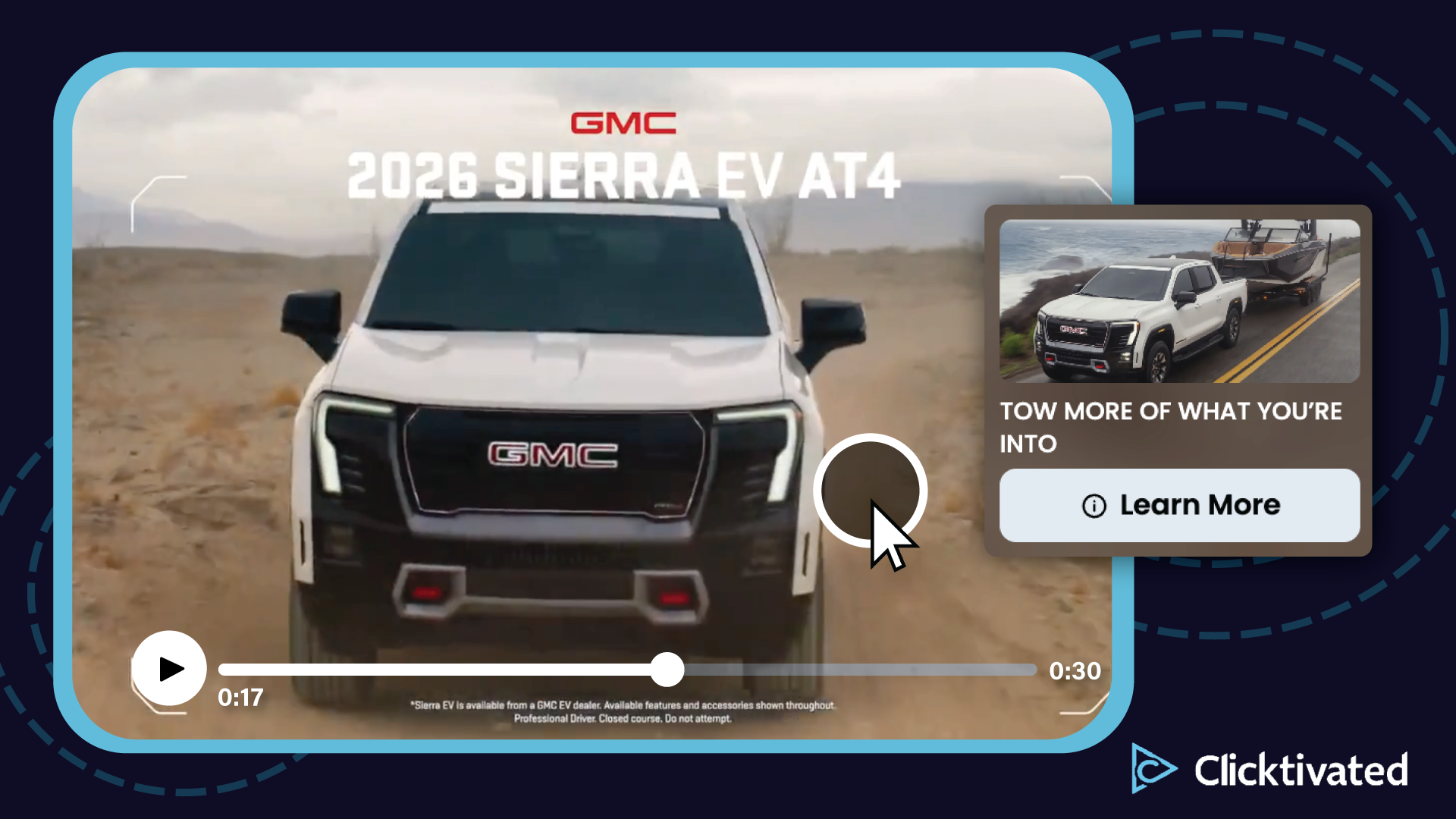
When Content Becomes the Conversation: How GMC Is Redefining Automotive Engagement
Today’s buyers don’t want to be guided step by step through a purchase. They want to discover on their own. When consumers can explore without interruption, they commit faster, and brands gain earlier insight into what’s resonating.